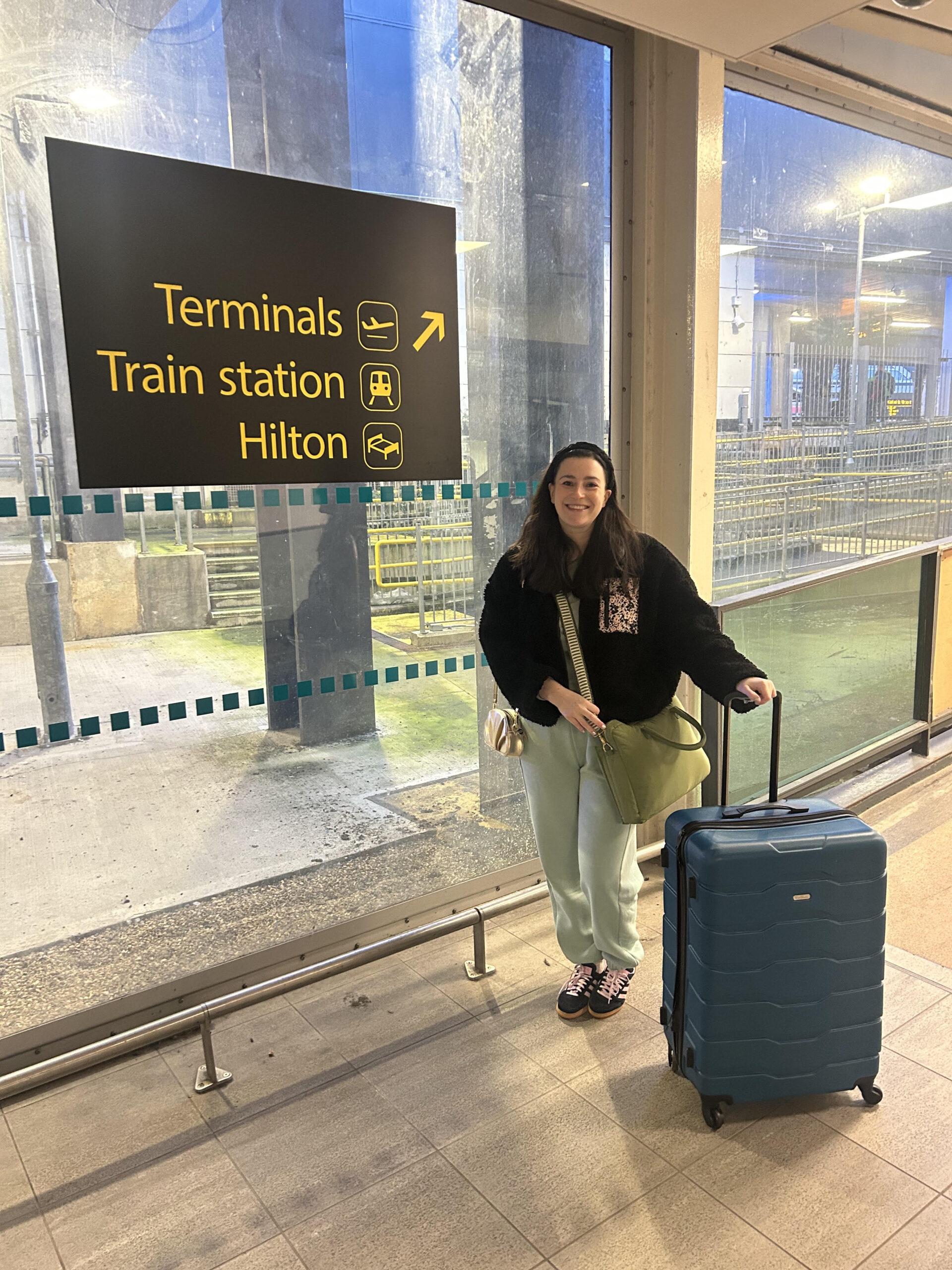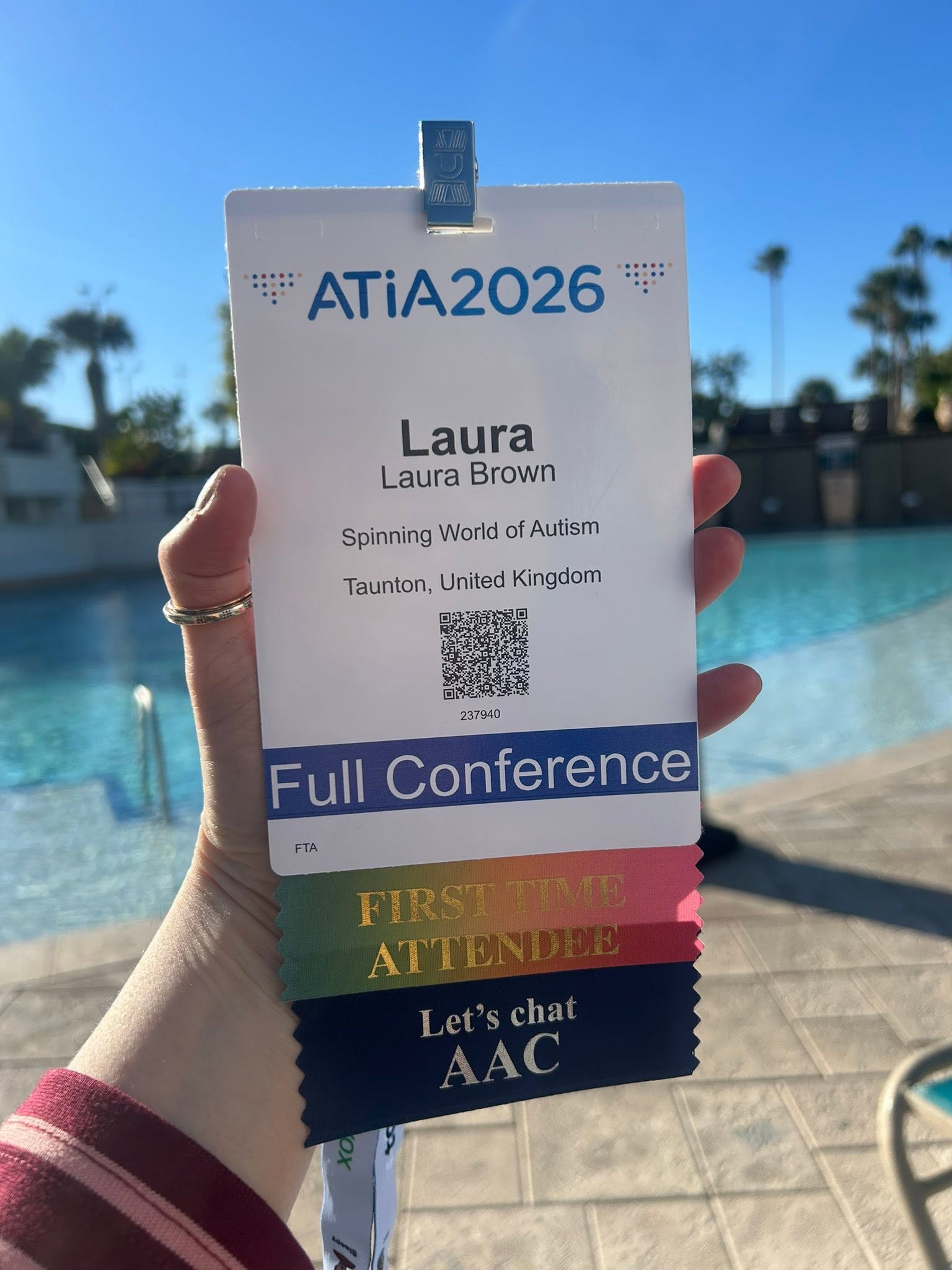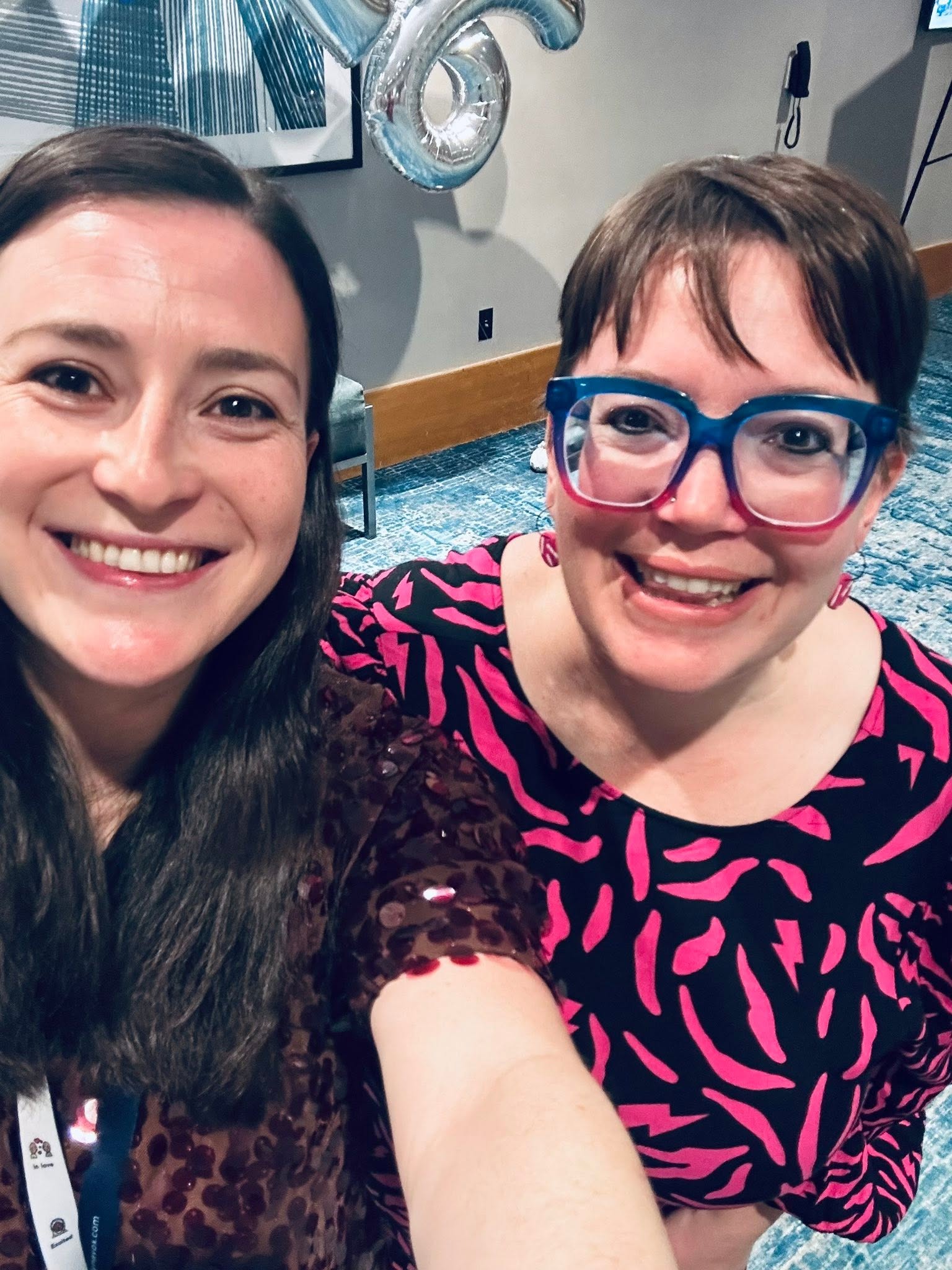
Flying out to Florida to attend ATIA 2026 with my conference buddy, Kate Reader, has been one of the absolute highlights of my advocacy work so far, and something I will truly remember forever.
I’m Laura, parent of a non-speaking autistic child who uses an AAC device first and foremost, but secondly, I’m an exceptionally proud autism and AAC advocate. Ethan, who has used his AAC device for over two years, is the light of our world, and his AAC use has changed all of our lives for the better. He gives us insights into his world, he can tell us when he needs help or when he’s poorly, and we can see his incredible sense of humour.
As the parent of an AAC user, rather than a professional in the world of Assistive Technology, I was a little apprehensive about applying for the AT Scholar opportunity. However, inspired by previous Scholars and my own little boy’s use of AAC, I decided to take the plunge.
Cue Tina’s call, another memory that will stay with me forever, sharing the news that I had been chosen to attend ATIA in person. And, as they say, the rest is history.
Here are a few things I picked up from the conference that have informed my AAC advocacy work and use within my own home ever since:
- A reminder that communication is hard, especially for autistic AAC users when they are overstimulated. However, there are a few things we can do to make communication as easy as possible during tougher periods. For example, use settings to turn down screen brightness, tone down colours, and create specific easy-to-use regulation folders or filters. Could you even record your own softer parent voice specifically for this folder?
- The need to be incredibly careful that we don’t unintentionally teach performance or compliance for AAC users. We don’t want to create a world where they say what they think we want to hear, rather than what is important to them. AAC users need a sense of belonging. The device needs to be theirs, and they must be shown how to access language such as “no”, “go away”, and “I don’t want to”, with those messages being respected. A quote that stuck with me:“If an AAC user feels like they are not listened to, they will just stop communicating.”
- AAC users need to see themselves as communicators, and for this to happen, authentic communication needs to be accessible and age-appropriate. True humour, true protest, and true wants and needs all equal true communication. We shouldn’t decide what an AAC user’s opinions, authentic thoughts, or humour are. We need to remove taboo and censorship, and have authentic communication at the heart of everything we do.
- From Taboo or Not Taboo: “Abuse thrives when communication is censored.” Not pleasant to consider, but exactly why we need to.
- AI, while needing to be used carefully and ethically, is something that can definitely support AAC use. One wonderful idea I came across was using AI chat to support AAC use in play. For example, you could describe the age of your child, their favourite TV show, and what you are playing with, then ask AI to suggest some key phrases from the show that you could input into their AAC device. Play creates opportunities for fun AAC use and builds skills such as turn-taking, imagination, listening, and interaction, all with fun at its core. I loved this idea because, although we didn’t yet have folders dedicated to play based on TV shows, we have had lots of lovely AAC moments with my son communicating phrases from his favourite programmes throughout the day. From lived experience, I know how hugely motivating this is for him.
- The importance of social interaction opportunities with peers who also use AAC to communicate. This should be led by AAC users, not directed by professionals. As one AAC user put it: “Professionals should refer to us.” I love this!
- Modelling communication around perceived requests. For example, if an AAC user says “chocolate”, don’t automatically assume they want chocolate. They may want to talk about chocolate instead. Model phrases such as “I love chocolate”, “It’s my favourite”, or “It’s so crunchy”, so you are also demonstrating conversation around the topic.
- AAC users report, time and time again, how AAC improves their quality of life in every way, including education, respect, and social relationships. Caregivers also report less worry, deeper relationships with their children, and a greater sense of connection.
And, last but not least, I hugely enjoyed the Prentke AAC Distinguished Lecture from the one and only Mateo Moreno. Here are four takeaways, although I had many more:
- Students often understand my AAC device far better than teachers. Teachers test; students converse. Teachers can sometimes have low expectations, whereas peers often seem to do the opposite. They wait and really listen.
- Why is there often a double standard for AAC users? We must listen to AAC users and all the ways they communicate. Please never say “use your device” when they have used Makaton perfectly to communicate.
- “Not being able to speak didn’t stop me from wanting to be heard.”
- The importance of AAC mentorship and community. It takes time to learn how to communicate with other AAC users, but the benefits are huge for everyone.
Thank you to everyone who makes this ATIA opportunity happen. Being part of the Assistive Technology community is an incredible place to be, and a true privilege.
Good luck to all AT Scholars in 2027 and beyond.